
Containment Boom & Diversion Boom
Industrial Oil Skimming and Containment Systems Accessories
- Durable construction: Flexible thermoplastic fabrics are dielectrically sealed (welded) for strength
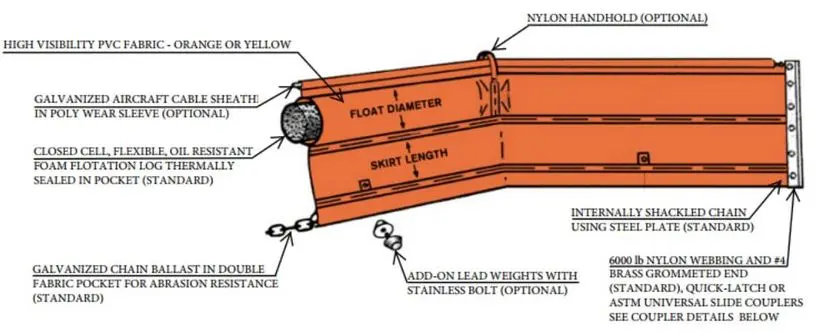
- Built-in flotation & ballast: Enclosures for flotation logs and galvanized chain ballast that also serves as a tension member
- Effective barrier: Skirt extends below the surface of the water to provide a flexible floating barrier
- Double tension option: Top cable in a top pocket provides added strength
- Rapid deployment: Quick connect hardware allows easy towing into position
- Containment & diversion: OPA 90 boom (6” x 12”) for containment; smaller diversion boom for corralling and guiding
- Customizable: Options for flotation diameters, skirt lengths, chain sizes, fabrics, top cable, and end couplers
- Broad application range: Inland and nearshore use from small waters to large lakes, bays, or harbors with waves and currents
IN STOCK. READY TO SHIP. PROBLEM SOLVED.
Got a containment job on the water? We keep booms and diversion gear ready so you can deploy fast, corral floaters, and get control without waiting. Just ask.
Containment Boom Features
01
Design
- Thermoplastic fabrics: Extremely durable, flexible materials are dielectrically sealed (welded)
- Integrated structure: Pockets/sleeves for flotation logs and galvanized chain ballast that also serves as a tension member
- Subsurface skirt: Extends below the surface to form a flexible floating barrier
- Top cable option: Installed in a top pocket to provide double tension and very strong assemblies
02
PERFORMANCE
- Containment boom: Often referred to as OPA 90 boom (6” x 12”) to hold/retain floating oils and sometimes debris
- Diversion boom: Smaller floats and shorter skirts for corralling, herding, guiding or funneling floating oil or other surface floaters
- Field-proven utility: Used for moving product and keeping it concentrated in applications like cranberry and duckweed growers
03
INSTALLATION & HANDLING
- Quick connections: Hardware enables easy towing into position
- Inland & nearshore: From small bodies of water to large lakes, bays, or harbors with winds, waves, currents, and tidal flows
04
OPTIONS
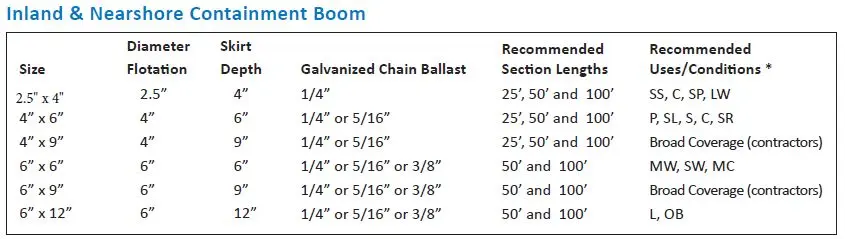
- Configurable flotation: Flotation diameters and skirt lengths tailored to site needs
- Hardware choices: Chain ballast sizes, fabric types, top tension cable sizes/types, and end couplers
- Standard sizes: Common and standard sizes of containment and diversion boom available
WHY FLOATING CONTAINMENT & DIVERSION BOOM MATTERS
Oil and debris don’t wait for ideal conditions. These welded-fabric booms with integrated flotation, ballast, and quick-connects let you corral, hold, or guide surface pollutants across everything from calm ponds to tidal harbors.
Floating Containment & Diversion Boom Overview
Click Here For A Complete Boom Brochure
Frequently Asked Questions
What materials are used to build the boom?
It is manufactured from extremely durable, flexible thermoplastic fabrics that are dielectrically sealed (welded).
How does the boom maintain stability and tension in the water?
Enclosures hold flotation logs and a galvanized chain ballast that also serves as a tension member, with an optional top cable for double tension.
What is the difference between containment boom and diversion boom?
Containment boom (often OPA 90 boom, 6” x 12”) holds or retains floating oils and sometimes debris, while diversion boom uses smaller floats and shorter skirts to corral, herd, guide, or funnel surface floaters.
Can the boom be customized for specific sites?
Yes, customization includes flotation diameters, skirt lengths, chain ballast sizes, fabric types, top tension cable sizes and types, and end couplers.
Where can these booms be used?
Inland and nearshore waters, from small bodies with minimal currents to large lakes, bays, or harbors where winds, waves, currents, and tidal flows are present.